Secondhand Shopping: How I Find Plus-Size Treasures

Reading time: 8 minutes
Last week I stood in a Goodwill in Brooklyn holding a vintage blazer in size 18 – original price $300, secondhand price $20. Moments like this show me that plus size secondhand isn't a matter of luck, it's a matter of the right strategy. Many curvy women give up in frustration because in classic thrift stores they only find sizes 6 to 10. I'll show you how to track down sustainable plus size fashion on purpose.
Secondhand for plus sizes has long lived in the shadows. But since 2023, the availability of larger sizes in secondhand stores has increased by 34%, according to a survey by the Swiss Secondhand Association (in Switzerland). That means there's more selection than ever before – if you know where to look.
Why plus size secondhand is about more than saving money
For three years now I've bought about 60% of my wardrobe secondhand. That saves me around $1,300 a year and significantly reduces my fashion footprint. Sustainable fashion for curvy women doesn't have to be expensive. A new plus-size piece costs $90 on average, while the same piece secondhand runs $15-25.
My biggest discovery was a maxi dress by Marina Rinaldi at a charity thrift shop – retail price $380, I paid $25. Finds like that keep me motivated. At the same time I support nonprofit organizations and keep wearable clothing out of the trash.
The best places for secondhand shopping tips for plus size women
Not every secondhand store carries size 16 and up. Over the last two years I've systematically tested where finding plus size clothing secondhand actually works.
Thrift store chains with a plus-size selection
Goodwill and Salvation Army stores in larger cities often sort larger sizes out on purpose. I visit my Goodwill every other Thursday – that's the day after the big sorting. The racks are full of fresh stock then.
Thrift stores in bigger cities are worth it, too. My local thrift shop in particular has set up its own plus-size corner. Since March 2024 they've marked sizes 14 and up with green tags.
Online platforms for curvy women in particular
eBay and Facebook Marketplace have filters for clothing sizes, but a search for "size 18" often turns up only 12-20 results. Poshmark works better, where I search specifically for brands like Torrid, Lane Bryant or Eloquii. In January 2025 alone, over 450 plus-size pieces were listed there in my area.
Facebook groups like "Plus Size Thrift & Swap NYC" or "Curvy Fashion Swap Chicago" are real gold mines. In the Chicago group, about 80 pieces change hands every month. That's where I found my favorite jeans – a stretchy bootcut in size 16 that fits perfectly. You'll find more about my pants-shopping strategy here.
Finding vintage shops with large sizes
Vintage for plus sizes is a challenge because standard sizes used to run differently. A size 12 dress from the 1970s often equals a 16 or 18 today. A vintage shop in Brooklyn's Williamsburg carries a hand-picked plus-size selection. The owner, Sarah, measures every piece and lists the actual measurements.
In Portland, "Vintage Fever" on Hawthorne is worth a visit. In fall 2024 I found three blazers from the 80s there, all between size 14 and 18. Price per piece: $35.
My tried-and-tested secondhand search strategy
Success at a flea market as a curvy woman depends on being systematic. I never walk into a secondhand store without a plan.
- I write down my exact measurements: bust, waist, hips and preferred sleeve length. I keep these numbers on my phone.
- I visit stores on weekdays between 10 a.m. and noon – fewer crowds, more peace for browsing.
- I plan at least 45 minutes. If you rush, you overlook the best pieces.
- I search every section systematically, including the men's blazer section. Oversized is on trend.
- I try on every piece, even if it doesn't look like it fits at first glance. Size labels are often misleading.
The trick with days and times
Most thrift stores put out new stock on Mondays and Wednesdays. That's why I visit on Tuesdays and Thursdays. At my local Goodwill I've noticed that the fewest customers are around between 2 and 4 p.m. – perfect for browsing in peace.
Flea markets are a different story. The flea market in my neighborhood takes place on Saturdays from May to October. I'm there at 8 a.m., an hour before the official start. The vendors are still setting up and are often willing to sell early.
How do I recognize quality in secondhand pieces?
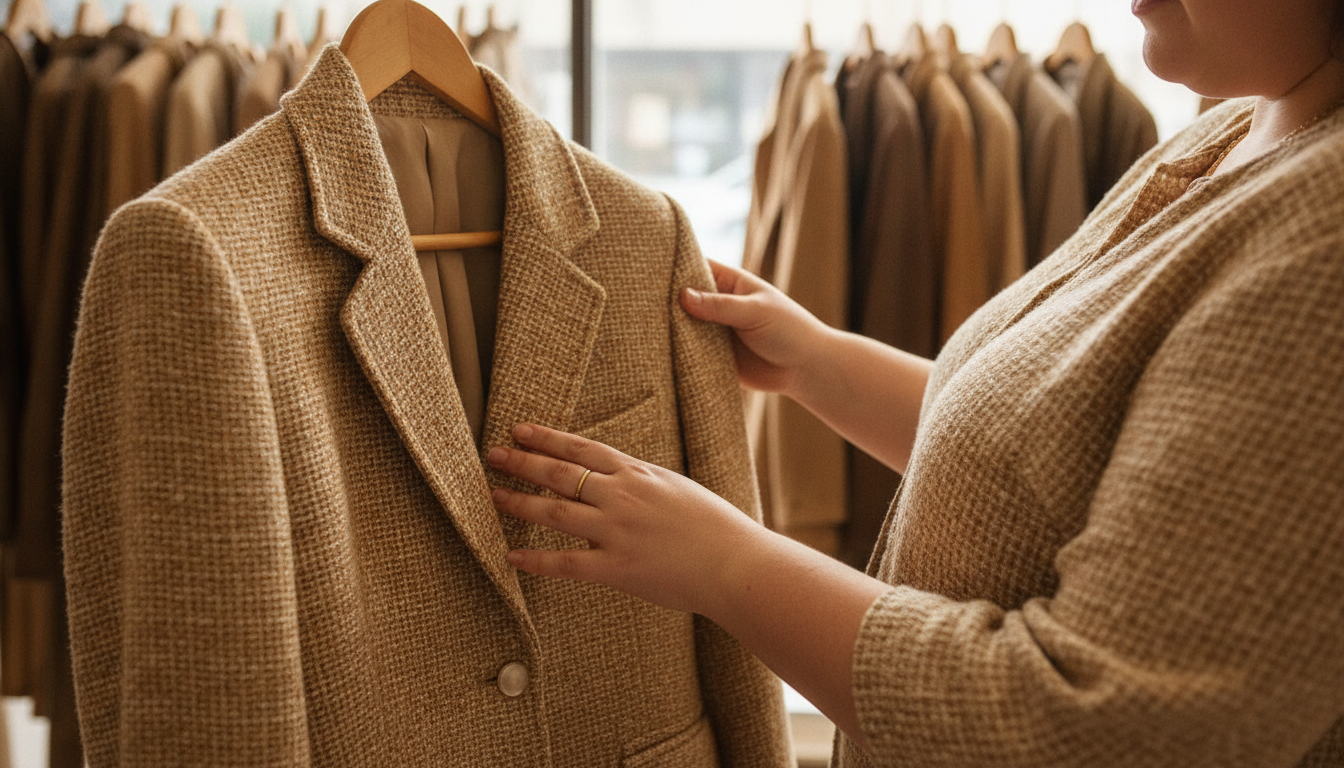
Plus size secondhand doesn't mean compromising on quality. I've learned to evaluate pieces in 30 seconds. First I check the seams: are they cleanly finished? Are threads coming loose? With blouses and dresses I check the button placket – if it ripples, the piece doesn't fit right.
The smell test is crucial. If a garment smells musty or of chemicals, I leave it on the rack. Even repeated washing often doesn't remove such odors. A light scent of detergent or fabric softener, on the other hand, is no problem.
With fabrics I prefer natural fibers: cotton, linen, wool. They last longer and feel nicer on the skin. Polyester pieces can look shiny and worn after years – you can see it right away in the sheen of the fabric. The quality check is similar to my fit check in a regular store.
Realistically assessing stains and damage
Small stains on the hem or under the arms don't scare me off if the price is right. With Fels-Naptha soap and OxiClean I get 80% of all stains out. A blazer with a coffee stain cost me $8 instead of $18 – after the treatment you couldn't see anything.
I replace missing buttons myself. At craft stores like Michaels I always find matching buttons for $2-3. A hole in the hem I can sew myself, but a broken zipper gets expensive. Repair is only worth it here with high-quality pieces.
Styling tips for secondhand treasures
My secondhand wardrobe consists of mix-and-match basics. I combine vintage jeans with a new top or a secondhand blazer with a modern dress. This combination looks individual and shows my personality.
I wear an oversized men's shirt in size XL as a long shirt dress with a belt. That way I create a statement piece out of a $12 find. I also buy scarves, wraps and belts almost exclusively secondhand now. At a thrift store I found a collection of eight vintage belts for $24 in total.
For color I rely on timeless tones: black, navy, beige, gray. These basics can always be combined. I add color accents with accessories – I buy those new because they're cheap and modernize the look.
Avoiding common mistakes in secondhand shopping
In the beginning I made every mistake you can make. I bought pieces just because they were cheap – not because they fit. My closet was overflowing with bad purchases. Today I ask myself three questions before every purchase: Does it really fit? Do I have something to combine it with? Would I also buy it new for $50?
Another mistake was letting size labels guide me. A 14 from H&M fits differently than a 14 from Zara or a vintage 14. Today I rely only on my measurements and the fitting room. That has saved me dozens of bad purchases.
Impulse purchases were also a problem for a long time. Today I photograph interesting pieces, walk a lap around the store and then decide. Most of the time I don't actually need the piece. This pause saves me about $300 a year in unnecessary purchases.
Combining sustainability and confidence
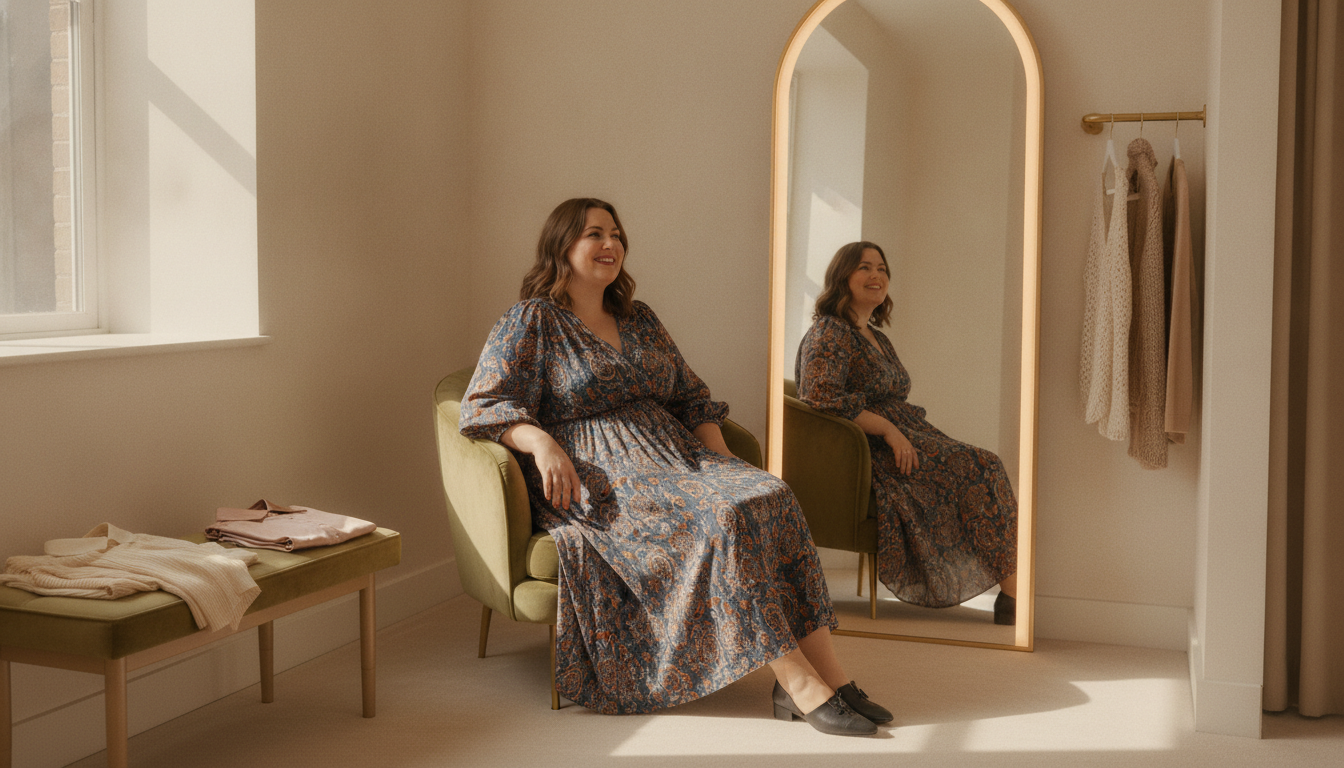
Secondhand for plus sizes is more than fashion for me – it's an attitude. It shows that curvy women don't have to rely on fast fashion. Every piece bought secondhand is a statement for sustainability and against the throwaway mentality of the fashion industry.
At the same time, successful secondhand shopping strengthens my confidence. When I find a great piece that fits perfectly and costs only a fraction, I feel like a winner. These small successes contribute to my positive body image, much like my daily body positivity morning ritual.
On MySugardaddy I learned that authenticity is attractive. Secondhand fashion underlines my individuality – I wear pieces that not every other woman has in her closet. That makes me interesting and shows character.
Frequently asked questions about plus size secondhand
How often should I visit secondhand stores to find something?
I visit my favorite thrift stores every two weeks and find an average of one to two fitting pieces per visit. Regularity matters more than frequency.
Are secondhand pieces hygienic?
Yes, I wash every piece right away at 100°F or warmer with a hygiene rinse. Reputable secondhand stores only accept clean, wearable goods.
Is secondhand worth it for underwear and swimwear?
No, for hygiene reasons I always buy bras, underwear and swimsuits new. I'd rather save elsewhere.
How do I find my size in vintage clothing?
I ignore size labels completely and instead measure bust, waist and length directly on the piece. Vintage sizes often run 2-3 sizes smaller.
What do I do with secondhand pieces that no longer fit?
I sell them on Poshmark or take them back to the thrift store. That keeps the cycle closed and other women benefit from my former favorites.
My conclusion: plus size secondhand is a win all around
Secondhand shopping tips for plus size women mean freedom to me: financial freedom through low prices, fashion freedom through unique pieces and ecological freedom through mindful consumption. Sustainable plus size fashion doesn't start with expensive eco labels, but with smart shopping at the thrift store around the corner.
My recommendation: start with a single secondhand store near you. Visit it every two weeks at the same time. Give yourself 45 minutes and search every section systematically. You'll be surprised how many plus size secondhand treasures are waiting for you. The investment of time pays off many times over – in your wallet, in your closet and in your confidence.