Fit Check: How I Instantly Tell Whether a Piece Fits
Reading time: 10 minutes
Last week I stood in a fitting room at Target in Chicago holding two identical blouses – both size 16, both from the same brand, and they fit completely differently. One dug in under the arms, the other fit perfectly. In that moment I was reminded again how important it is to recognize the right fit instead of blindly trusting size labels. After 8 years of shopping experience as a plus-size woman, I've developed my own fit check that tells me in 60 seconds whether a piece truly fits or only looks good in the store.
Recognizing fit has nothing to do with the size on the tag. A 2023 study by the Zurich University of Applied Sciences in Switzerland shows that the same standard size can differ by up to 3 inches in waist circumference between brands (source: ZHAW Institute of Materials and Process Engineering). That's why I rely on concrete fit checks instead of numbers.
The 5-point check: my fit checks right in the fitting room
I always start my fit check with the same 5 critical points. This method has already saved me from at least 20 bad purchases – pieces I would otherwise never have worn again after a single wear.
Check 1: The shoulder seam sits exactly right
The shoulder seam has to end exactly where my shoulder turns into my arm. If it sits even an inch further in, the piece looks too tight. If it sits outside, I look broader than I am. I raise both arms over my head – does it pull under the armpits or does the seam pull forward? Then the clothes don't fit right. With blouses and dresses this point is especially critical, because a wrong shoulder area ruins the entire silhouette.
Check 2: The fabric lies smooth but doesn't wrinkle
I turn sideways to the mirror and look at bust, stomach and backside. Are there horizontal wrinkles pulling? That's my sign that the piece needs one size up. According to a 2024 survey by the Swiss Textile Association, 67 percent of plus-size women say that pulling seams are their main problem when buying clothes (source: Swiss Textiles). At the same time, the fabric must not hang like a sack – then the piece is too big. Recognizing fit means finding that narrow line between too tight and too loose.
Check 3: I can move freely
In the fitting room I do three movements: I sit down, I lift both arms out to the side to shoulder height and I bend forward. Does anything pinch? Does the waistband ride up? Does the crotch seam strain? Then I don't buy the piece, no matter how great it looks standing. For jeans in my everyday life, that means specifically: I have to be able to squat without the waistband cutting into my stomach or the pants sliding down at the backside.
Check 4: The length proportions are right
With tops, I look at where the hem ends. Does it cut off exactly at the widest point of my hips? That visually shortens me. Ideal lengths end either 2 inches above or 4 inches below it. With pants I check that the crotch doesn't hang too low – a typical problem with straight cuts. The crotch seam should sit at most an inch below my actual crotch, otherwise the legs look shorter.
Check 5: The lining fits too
Many people forget this check completely. I feel from the inside whether the lining lies flat or ripples. This is especially crucial with dresses and blazers. A rippling lining means the outer shell fits, but the inside is cut too tight. After 3 hours of wear at most, it gets uncomfortable, I promise.
Typical fit traps I now spot immediately
There are certain cut flaws I didn't used to notice. Today I see them in seconds and skip the fitting.
- Armholes cut too small: With tops and sleeveless dresses, I immediately feel it cutting into my armpits if the armhole sits too high. That happens with at least 40 percent of the pieces I try on. A good armhole ends at least 1 inch below the armpit.
- Waist shaping in the wrong place: Many dresses have their narrowest point where the designer assumes the waist is – not where mine actually is. I hold the piece up in front of me and check whether the seam sits at my natural waist. If not, I leave it on the rack.
- Cuffs that are too tight: With blouses and sweaters I mentally roll up the sleeves – does that work without a fight? If the cuff is too tight, I can't casually push the sleeves up without it looking like a sausage casing. For me, that's a dealbreaker.
- Hidden length flaws in skirts: A skirt that fits perfectly in front can be too short in back and ride up. I always turn all the way around and check the back view in the mirror. With a pencil skirt, the length in back should be identical to the front, and with A-line skirts there can be at most an inch of difference in back.
Fitting room tips: how I test realistically in the store
The lighting in fitting rooms is often flattering. At an H&M in Seattle I once bought a dress that looked fantastic in the store – in daylight the color was awful and the fit exposed every dimple. Since then I've adjusted my fitting routine.
When shopping I always wear a well-fitting bra and skin-tone shapewear. Not because I want to hide, but because that way I see realistically how the piece will fit in my everyday life. With the wrong bra, every top looks bad, no matter how good the cut is. I also always take at least 2 sizes into the fitting room – the one I expect and one size up. In 60 percent of cases the larger one is the better choice, because clothes fit perfectly on a curvy figure only if they don't pull.
Another trick: I take photos of myself in the fitting room with my phone from the front, side and back. What looks good in the mirror can reveal problem spots in a photo. The camera angle is more honest than my wishful thinking. If I look at the photo and think "Hmm, so-so," I don't buy it. Only if I think "Wow, that fits!" does the piece come home with me.
Ignoring size labels: why I buy by feel
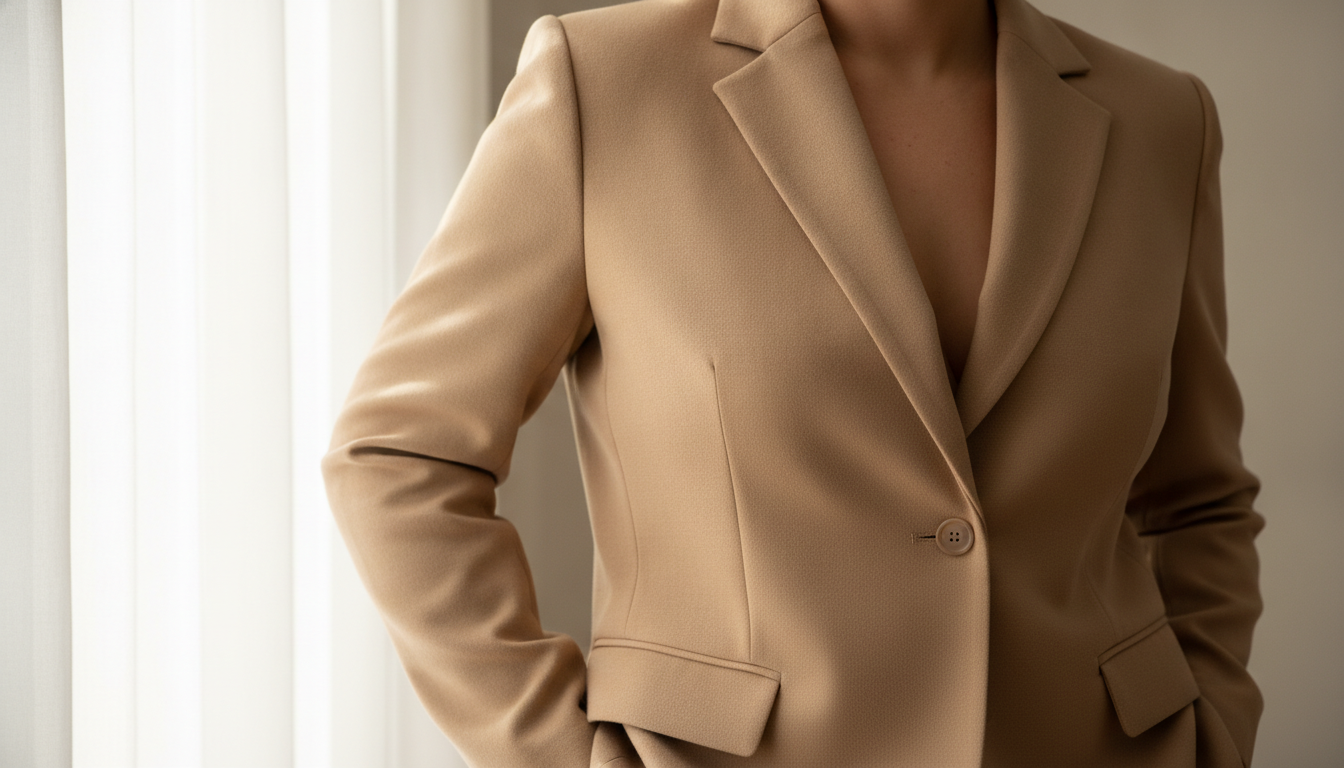
Depending on the brand, I wear anywhere between a size 14 and a size 20. At Zara I usually need an 18, at Mango a 16, at Old Navy a 20. That shows me that sizes are completely arbitrary. The right fit has nothing to do with the number on the tag, but with how the piece sits on my body.
That's why I stopped defining myself by sizes. If I need a size 20 in a piece for it to fit perfectly, then that's my size for that piece. Period. This attitude has saved me so much frustration. I used to try to squeeze into a 16 because that was "my size." Today I take the size in which I feel comfortable and look good. That has also strengthened my confidence, much like choosing the right colors when styling does – together, the two make the difference between "so-so" and "wow."
Material and workmanship: the underrated fit factors
One detail many people overlook: the material hugely affects whether clothes fit right. A stiff cotton fabric forgives nothing, jersey with 5 percent elastane is more forgiving. I pull on a seam and see whether it gives. If it does, the piece will still be comfortable after 4 hours.
I also check the seam strength. Thick, firmly stitched seams mean quality and that the piece won't lose its shape after washing. Thin, uneven seams are a warning sign. With an $89 dress from a mall store in Philadelphia, I once experienced all the seams warping after the first wash – it suddenly no longer fit, even though it had fit perfectly before.
My emergency check: the 10-second rule
When I'm unsure, I use the 10-second rule: I stand in front of the mirror, close my eyes and slowly count to 10. Then I open them and look at myself. The very first thought that comes to me is the truth. If I think "Hmm, maybe..." or "Could work if...", then it doesn't really fit. Only if my first thought is "Yes, exactly like this!" do I buy.
This method sounds simple, but it has already saved me hundreds of dollars. Our subconscious knows right away whether something fits. We just often talk ourselves into it because we absolutely want the piece or because it's on sale. But a badly fitting piece is too expensive even at $20 if I never wear it.
Special case online shopping: recognizing fit without trying on
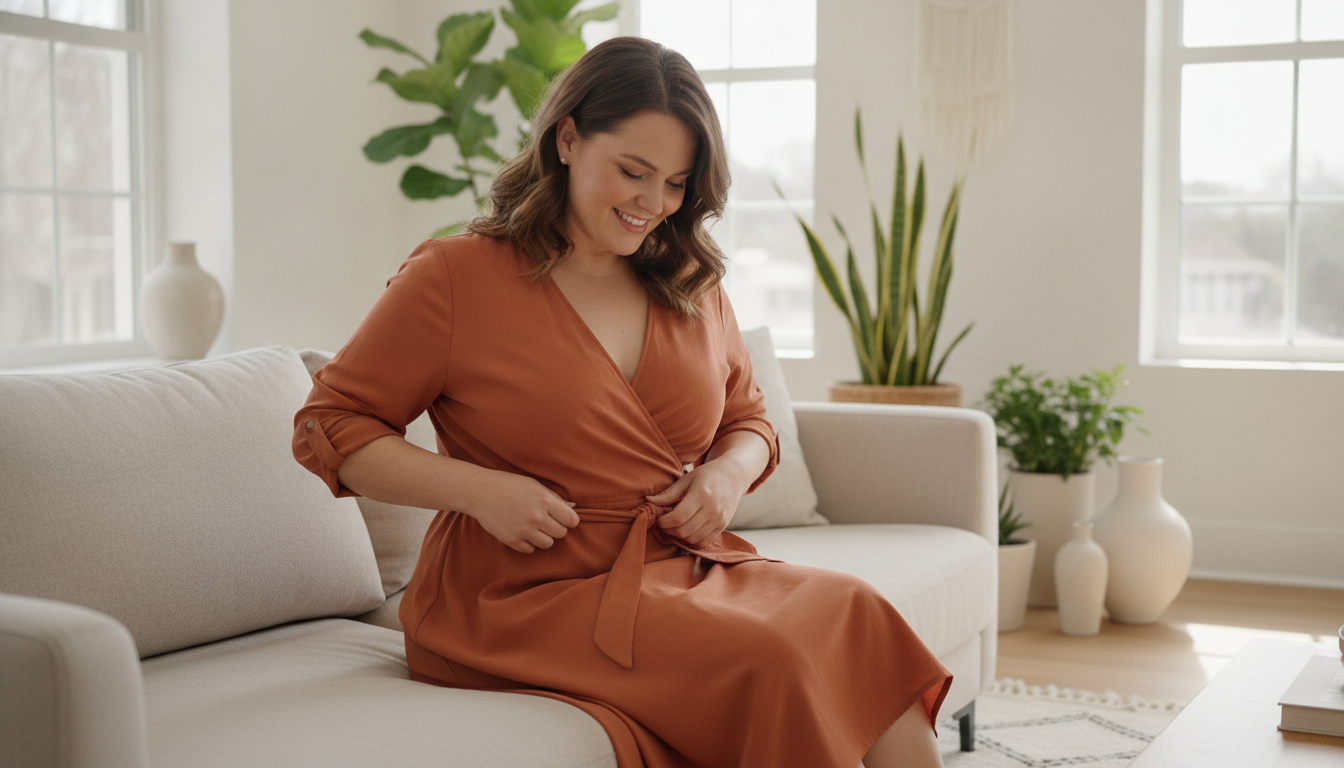
Online I only order from shops with free returns. At Nordstrom or ASOS I generally order 3 sizes and send 2 back. That sounds like a lot of effort, but it's the only way to find the right fit online. I also note down the exact measurements from the size chart for every piece I buy – bust, waist, hips, length. That way I build a personal database and know more precisely next time which size I need.
Another tip: I read all the reviews in which other plus-size women describe their size and fit. If 10 women write "Runs small, size up," then I do. This wisdom of the crowd is pure gold and saves me many returns.
FAQ: Common questions about fit
How do I tell whether jeans really fit?
The jeans fit if you can sit down and stand up without the waistband cutting into your stomach or sliding down at the backside. The crotch seam also shouldn't hang too low or cause wrinkles under the backside. If you have to go up a size so nothing pulls, that's the right size.
What do I do if the length is off but everything else fits perfectly?
Pants and skirts are easy to shorten, and in the US that costs between $15 and $30 at an alterations tailor. If only the length is off but waist, hips and thighs fit perfectly, I buy the piece and have it altered. Making something longer usually isn't possible, though, so be careful with pieces that are too short.
Can a piece fit differently after washing?
Yes, especially cotton and viscose can shrink by up to 3 percent. With these materials I therefore buy slightly larger or wash cold the first time and without spinning. With denim and jersey containing elastane the risk is lower, but here too the fit can change after repeated washing.
How can I recognize good quality right in the store?
I look for even, firmly stitched seams, well-finished lining without loose threads and buttons and zippers that feel sturdy. I also pull lightly on the fabric – if it warps immediately or forms runs, I leave the piece on the rack. Good quality also means the fit is retained after repeated wearing and washing.
Do I need to pay less attention to fit with expensive brands?
No, price doesn't guarantee a perfect fit. I've tried on $200 pieces that fit catastrophically, and $20 H&M basics that fit like a glove. Every brand has its own patterns, and they either fit my body or they don't. Price isn't an indicator of good fit, but usually only of material and brand name.
Conclusion: trust your body feel, not the label
Recognizing fit is a skill that develops over time. The more often I run my 5-point check, the faster I know whether a piece really fits. Today I no longer need 60 seconds to decide whether to buy something. My most important tip: trust how the piece feels, not what the label says. An 18 that fits perfectly is better than a 14 I squeeze into.
If you want to know more about showing your personality with confidence in other areas too, feel free to check out my thoughts on witty comebacks to prejudice. Because whether shopping or in everyday life, it's about standing by yourself and feeling comfortable in your own skin. The right fit is only the first step – the rest is inner attitude.