Relaxation Rituals: My Everyday Self-Care Routine
Reading time: 10 minutes
Last week I got home to my Chicago apartment after a 9-hour day and could barely lower my shoulders. My neck felt like concrete, my head was pounding, and I had the feeling that my body was screaming for a break. In that exact moment it hit me: daily relaxation rituals aren't a wellness frill for free afternoons, they're an absolute necessity. If we don't consciously make time for self-care, we pay the price with exhaustion, irritability and the feeling of running after our own lives.
As a curvy woman, it took me a long time to understand that self-care has nothing to do with selfishness. Quite the opposite: a 2023 study from the University of Bern shows that 68 percent of working women in Switzerland regularly suffer from chronic stress, and among plus-size women the figure is even 74 percent because of additional societal expectations. Those numbers are a wake-up call. I want to show you how I've worked relaxation rituals into my packed everyday life and how you, too, can boost your well-being with small, intentional moments.
Why daily relaxation rituals are more than a luxury
Relaxation techniques aren't a nice-to-have, they're scientifically proven tools for mental and physical health. According to the 2022 Swiss Health Survey, 43 percent of adults say they often feel stressed. For women between 25 and 45 the figure is even 51 percent. Stress isn't just unpleasant, it demonstrably leads to cardiovascular disease, sleep problems and a weakened immune system.
I've found that a self-care routine doesn't mean spending 2 hours a day at the spa. It's about realistic, repeatable moments that I can actually stick with. When I take 15 minutes every evening for conscious breathing, I notice a difference in my sleep quality after just 3 days. How do I work relaxation rituals into my everyday life without them becoming one more to-do? By linking them to routines I already have.
My personal everyday relaxation rituals
Morning: 5 minutes for an intentional start
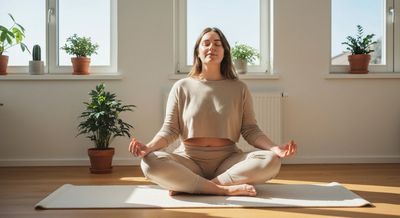
I used to jump up the moment the alarm rang and rush straight to the bathroom. Today I give myself 5 minutes before I get up. I breathe in and out consciously, counting to 4 on the inhale, holding for 4 seconds, and exhaling for 6 seconds. This technique is called box breathing, and the Swiss Yoga Association recommends it as one of the most effective methods for stress relief for women. It works on 5 out of 7 days for me, and that's perfectly enough.
After getting up, I drink a big glass of lukewarm water with a squeeze of lemon. That sounds simple, but this small act of self-care signals to my body: today I'm taking care of you. It's a ritual that takes 2 minutes at most, but it starts my whole day on a more positive note.
Midday: movement instead of a screen
I no longer spend my lunch breaks at my desk. Instead I go for a 10-minute walk, rain or shine. In Chicago I often walk along the Lakefront Trail, and in Minneapolis through Loring Park. This simple movement demonstrably reduces stress hormones. A 2024 study from ETH Zurich shows that just 12 minutes of walking in nature can lower cortisol levels by an average of 21 percent.
When the weather is really too bad, I do 3 stretches at the office: shoulder rolls, neck tilts to the side, loosening up my wrists. That takes less than 4 minutes and helps enormously against tension. These simple relaxation techniques for the office have reduced my chronic neck pain by about 60 percent.
Evening: my sacred evening ritual
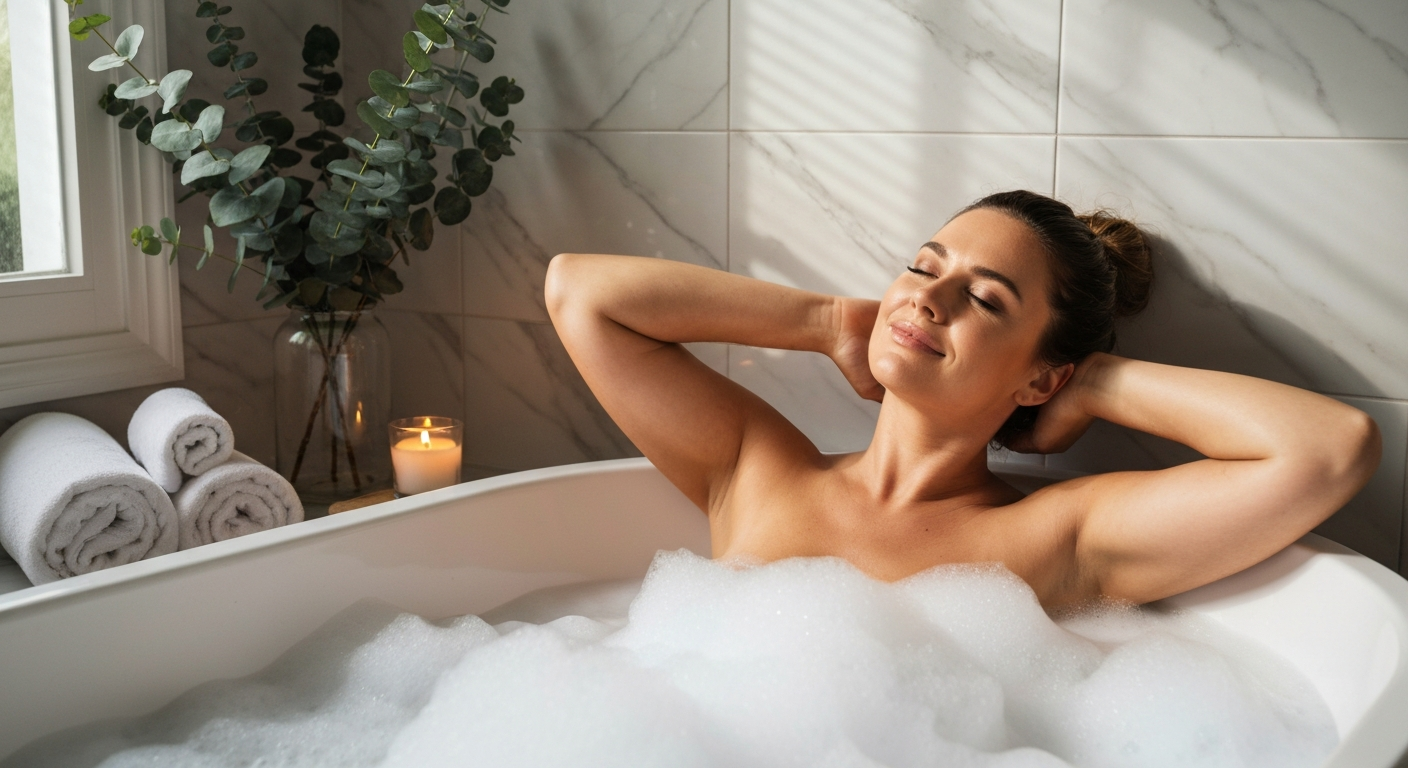
From 8 p.m. on, my phone is on silent. I know that sounds radical, but this one step has boosted my well-being more than any yoga app. Then I take 20 to 30 minutes for a bath or a long shower. I use lavender oil from the Swiss brand Farfalla, and 3 drops in the bath water are enough. According to a 2023 study from the University of Basel, lavender reduces anxiety by up to 34 percent with regular use over 4 weeks.
After the bath I consciously moisturize my body. As a curvy woman, it took me a long time to appreciate my body. Today, applying lotion is an act of love. I take time for every part of my body, gently massaging my legs, my belly, my arms. That takes 8 minutes, and afterward I feel grounded and calm.
Practicing mindfulness without the woo-woo
For me, practicing mindfulness as a plus-size woman means not ignoring or fighting my body, but listening to it. I practice a simple technique: the body scan. Once a day, usually before falling asleep, I mentally scan my body from my feet to my head. Where is the tension? Where do I feel comfortable? This practice takes 7 to 10 minutes and helps me spot stress signals early.
According to a 2024 study from the University of Freiburg, a regular body scan improves body awareness by 42 percent and reduces emotional eating by 28 percent within 8 weeks. Those numbers convinced me to stick with it. I don't use an app for it, I simply do it quietly on my own. Sometimes my mind wanders, sometimes I fall asleep. Both are okay.
Another method is mindful eating. Once a day I eat without my phone, without the TV, just me and my food. Usually that's my breakfast: homemade overnight oats with rolled oats, apples and nuts. I chew slowly and taste consciously. This has nothing to do with dieting, but with enjoyment and mindfulness. If you want to eat more mindfully, quick vegetarian dishes offers plenty of inspiration for stress-free, nutrient-rich meals.
Stress relief methods that really work
I've tried countless relaxation techniques. Some weren't for me, others have become fixed parts of my life. Progressive muscle relaxation after Jacobson is one of them. I tense different muscle groups one after another for 5 seconds and then relax them for 10 seconds. I start with my toes and work my way up through my legs, belly and arms to my face. After 12 minutes I feel like I've had a massage.
Journaling is another ritual I practice 4 times a week. In the evening I spend 10 minutes writing down everything that's going through my head. No grammar, no censoring, just thoughts on paper. According to the Journal of Health Psychology, journaling reduces rumination by 31 percent and improves sleep quality by 24 percent with regular use over 6 weeks. Those are numbers you can measure, and that's exactly what makes this method credible to me.
Exercise is also a central building block of my self-care routine for working women. I do gentle yoga or Pilates at home 3 times a week for 25 minutes. Not high performance, but conscious, flowing movements. If you're looking for inspiration for fitness at home, you'll find plenty of ideas there for body-friendly workouts without performance pressure.
Building a self-care routine: step by step
How do you build a self-care routine for working women that really lasts? My experience shows: start small and stay realistic. I began with just a single ritual, drinking water in the morning. Only after 3 weeks did the evening bath come in, then the lunchtime walks. Today, after 7 months, I have a web of small relaxation rituals that holds me up.
I recommend introducing a maximum of 3 new rituals at a time. Write them down and track them for 21 days. After that, it's highly likely they'll become a habit. According to a University College London study, it takes an average of 66 days for a new habit to become automatic. So be patient with yourself.
It's also important to adapt rituals to your life. If you have kids, your evening ritual will look different from mine. Maybe it's just 5 minutes in the bathroom instead of 30. That's perfectly fine. Self-care isn't a competition, it's an individual path.
Tools and aids that help me
I use a paper notebook for my journaling, not a digital tool. Writing by hand has a different quality for me. I also bought a yoga mat from the Swiss brand Kurma, designed specifically for curvy bodies, with a thickness of 6 millimeters for extra comfort. That small investment of $99 has made my practice noticeably more comfortable.
For breathing exercises I don't use an app, just my own count. It's free and always available. For progressive muscle relaxation I initially used a free audio guide from the Swiss Society for Anxiety and Depression, but by now I no longer need it.
The connection between relaxation and body acceptance
Relaxation rituals have helped me make peace with my body. When I consciously perceive my body through mindfulness exercises, I criticize it less. I feel what it does, how it carries me through the day, how it processes stress. That perspective has greatly strengthened my self-acceptance.
As a curvy woman, I'm often confronted with prejudice, even in the wellness world. Many yoga studios show only slim bodies, and many relaxation classes ignore that not every woman can or wants to sit in lotus position. I've learned to create my own rituals that suit my body. Sometimes that means adapting exercises or inventing entirely new ones.
The tips for curvy women also show how important it is to stay true to yourself and choose methods that fit your own body and lifestyle.
Relaxation and social connections
Relaxation doesn't always have to happen solo. Once a month I meet up with two friends for a wellness afternoon together. We go to a local day spa and treat ourselves to 3 hours of sauna, steam room and quiet room. It costs $55 per person, and every time it's an investment in my mental health.
These social relaxation moments are just as important as the private ones. We talk, laugh and sit in silence together. It's a ritual that connects me with others and relaxes me at the same time. Sometimes we also book a massage together, usually the 50-minute option for $110 at a local massage studio in our neighborhood.
- 5 minutes of conscious breathing in the morning for a calm start
- 10-minute walk during the lunch break for stress reduction
- 20 to 30 minute evening bath with lavender oil for deep relaxation
- 7 to 10 minute body scan before bed for better body awareness
- 10 minutes of journaling four times a week for mental relief
Frequently asked questions about everyday relaxation rituals
How much time do I need daily for relaxation rituals?
You don't need hours. I invest a total of about 45 to 60 minutes a day in various relaxation rituals, spread across the day. But you can also start with just 10 minutes and see what feels right for you.
What do I do if I can't find time for relaxation?
Then daily relaxation rituals are all the more important. Start with micro-rituals: 2 minutes of conscious breathing with your coffee, 3 minutes of stretching after getting up. Even the smallest moments add up and make a difference.
Which relaxation techniques are the most effective?
That's individual. For me, breathing exercises, the body scan and journaling work best. Try different methods and observe what really does you good. Scientifically proven are above all progressive muscle relaxation, meditation and regular exercise.
Can I practice relaxation rituals in a small space, too?
Absolutely. Most of my rituals don't need a special room. Breathing exercises work anywhere, the body scan in bed, journaling at the kitchen table. Even for yoga, a 2-square-meter area is enough.
How do I stick with my relaxation rituals long term?
By linking them to existing routines and staying realistic. If you resolve to meditate for 2 hours a day, you'll fail. If you resolve to breathe for 5 minutes after brushing your teeth, there's a good chance it will become a habit.
Conclusion: relaxation rituals as an act of self-love
Daily relaxation rituals aren't luxury items for people with endless time, they're necessary self-care for everyone who wants to lead a fulfilling, healthy life. I've learned that boosting your well-being doesn't mean being perfect or managing every ritual every day. It means consciously allowing yourself moments of calm and treating your own body with respect.
As a curvy woman, this self-care routine is especially important because we're often under extra pressure. Relaxation isn't a sign of weakness, but of strength. It allows us to recharge, think more clearly and treat ourselves with more love. Start today with a single small ritual. Maybe it's 3 conscious breaths when you wake up or 5 minutes without your phone before bed. That small step can be the beginning of a wonderful self-care journey.