Accepting Compliments: My Path to More Self-Acceptance

Reading time: 8 minutes
"You look great in that dress!" – and I immediately felt my cheeks turn hot. Instead of a simple "Thank you," what came out of my mouth was: "Oh, it's just the dress hiding things." Sound familiar? Accepting compliments was incredibly hard for me for years. Instead of taking praise, I reflexively deflected every form of recognition. Today I know there was more behind it than mere modesty.
In this article, I'm sharing my personal path to learning how to accept compliments without talking them down. You'll learn concrete strategies that helped me strengthen my self-worth and finally let positive feedback in.
Why Is It So Hard for Us to Accept Praise?
I remember a dinner with friends about three years ago. A friend said: "Melanie, you're really glowing today!" My automatic answer: "That's just the makeup." Later, at home, I asked myself: why couldn't I just be grateful?
According to a 2023 study by the University of Zurich, 68 percent of the women surveyed have difficulty accepting compliments without downplaying them. The reasons are varied: fear of envy, deep-seated self-doubt, or worry about seeming arrogant.
For me, it was a mix. As a curvy woman, I had internalized the message for years that I had to be modest and shouldn't take up too much space. Letting recognition in felt like breaking an invisible rule. Every compliment triggered an urge in me to make myself smaller.
The Turning Point: When I Started Questioning My Reactions
The moment that changed everything came in the spring of 2022. I was at an event in Chicago, wearing a new outfit that had taken me weeks to feel brave enough to wear. An acquaintance said: "You look fantastic, that color suits you incredibly well!" Automatically, I wanted to answer: "Well, I don't know..."
But then I paused. Why was I doing this? Why was I devaluing every kind gesture? I started observing my reaction patterns. I even kept a little list: every time I received a compliment and deflected it, I wrote down my answer. After two weeks, I had 17 entries. 17 times I had pushed praise away.
That realization was painful, but also liberating. I understood: accepting compliments doesn't mean being arrogant. It means appreciating other people's kindness.
Practical Strategies: How I Learned to Accept Compliments
The path to learning self-acceptance wasn't linear. I tried different approaches, and some worked better than others. These concrete strategies helped me most:
The 3-Second Rule
When I get a compliment today, I take three seconds to breathe consciously before I answer. In those three seconds, I interrupt my autopilot. Instead of deflecting right away, I make room for a conscious response. This simple technique has helped me say an honest "Thank you" in 80 percent of cases.
The Gratitude Experiment
I started to see compliments as gifts. If someone gave you a physical gift, would you say: "Oh, you shouldn't have, I'm not worth it"? Probably not. A compliment is also a gift, an expression of appreciation. That perspective changed everything for me. I practiced simply saying "Thank you, that really makes me happy," without justification.
The Mirror Method
Every morning, as part of my ritual, I stand in front of the mirror and give myself a compliment. At first it felt ridiculous. But my morning ritual has helped me build a more positive relationship with myself. Once I learned to give myself recognition, it became easier to accept it from others too.
Typical Traps When Accepting Praise and How I Avoid Them

On my journey, I stumbled into some typical traps. Here are the most common ones and how I handle them today:
- Qualifying the compliment: "This old dress? I've had it forever!" – Today I say instead: "Thank you, I really like it too."
- The counter-compliment: Immediately returning a compliment so I'm not the focus – Today I accept the praise first, and then I can respond authentically.
- The distraction: Changing the subject right away – Today I stay with the moment, even if it feels unfamiliar at first.
- The self-criticism: "Well, but my hair isn't cooperating today..." – Today I focus on what someone appreciates instead of countering it with criticism.
How Accepting Compliments Strengthened My Self-Worth
The change didn't happen overnight. But after about six months of consistent practice, I noticed a clear difference. I felt more comfortable in my own skin, more confident in social situations. My inner dialogue became kinder.
One especially striking moment was last fall. I was invited to a birthday party in Boston and wore an outfit that highlighted my curves. In the past, I would have spent the whole evening trying to make myself invisible. Instead, I enjoyed the atmosphere. When someone said: "You look stunning!", I answered with a real smile: "Thank you so much, that means a lot to me."
That small exchange no longer felt threatening. I had learned to take positive feedback for what it is: a kind gesture, not hidden criticism or a trap. Just as I learned to beat my inner critic, I also learned to let in outside appreciation.
The Connection Between Building Self-Worth and Letting Recognition In
The more I worked on my self-worth, the easier it became to accept compliments. It was like an upward spiral: when I accepted praise, I felt better. When I felt better, I could let in more recognition.
I began to understand that my difficulty with compliments was deeply tied to my self-image. For years, I had believed I wasn't enough. That conviction left no room for positive feedback. When I started working on that belief, a door opened.
Today I know: strengthening my self-worth doesn't mean being perfect. It means accepting myself as I am, with all my rough edges. And when someone appreciates something about me, that isn't a contradiction of my supposed flaws, just a different perspective.
What I Do Differently Today: My Routine for More Self-Acceptance
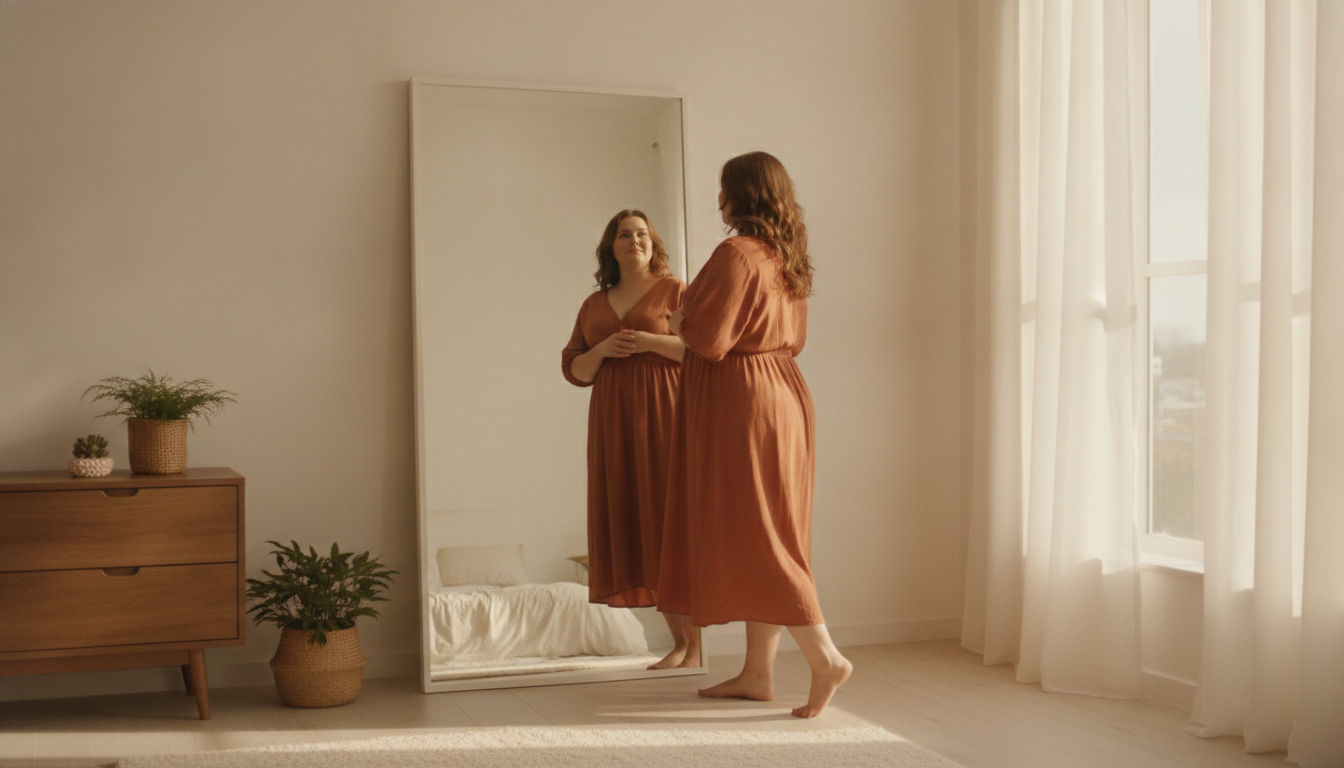
Accepting compliments is no longer a fight for me today, but a conscious decision. I've trained myself in some habits that help me stick with that decision.
Every evening, I briefly reflect on my day. I ask myself: did I get compliments today? How did I react? This short reflection keeps me mindful. When I notice I'm slipping back into old patterns, I correct gently, without judging myself.
I deliberately surround myself with people who support me. That doesn't mean I only hear praise. But I've learned to recognize toxic dynamics and set boundaries. People who constantly put me down or downplay my successes have less room in my life today.
I also practice self-compassion. On days when I don't feel special, I remind myself: my worth doesn't depend on my looks, my productivity or other people's opinions. That foundation makes it easier to see compliments for what they are: a nice bonus, not a confirmation of my right to exist.
How You Can Start Accepting Compliments Today
You don't have to follow my exact path. Each of us has her own story, her own blocks. But I'd like to give you a few concrete steps you can take today:
Start with small moments. The next time someone says something nice to you, take a deep breath and simply say: "Thank you." That's all you need. No "but," no "actually," no qualifying. Just "Thank you."
Observe your reactions without judgment. For a week, keep a mental or written list of how often you get compliments and how you react. This awareness is the first step toward change.
Talk about it with people you trust. I told my best friend that I'm working on accepting praise. She supports me by gently pointing it out when I deflect a compliment. Sometimes we need a loving mirror from the outside.
Be patient with yourself. This process takes time. I've been working on it for over two years and I'm still learning. Some days are easier than others, and that's completely okay.
Frequently Asked Questions About Accepting Compliments
Why do I feel uncomfortable when I get a compliment?
Discomfort with compliments often stems from low self-esteem or the fear of not being able to live up to expectations. Your brain is conditioned to this negative self-image and fends off positive signals because they don't fit the familiar pattern.
Is it arrogant to simply accept compliments?
No, accepting a compliment is a form of respect toward the person giving it. Arrogance would be demanding praise or putting yourself above others, not gratefully saying "Thank you."
What's the best way to respond to a compliment?
A simple, honest "Thank you, that makes me happy" is perfectly enough. You can optionally add why the compliment pleases you in particular or what you yourself like about the aspect mentioned.
How can I tell the difference between genuine and manipulative compliments?
Pay attention to the intention and the context. Genuine compliments are specific, given without expecting anything in return and feel consistent, while manipulative compliments often seem exaggerated or come with demands attached.
What do I do when I just can't accept a compliment right now?
On difficult days, a simple "Thank you, I appreciate your words" is entirely sufficient. You don't have to fully integrate the compliment emotionally; it's enough to acknowledge the gesture.
My Conclusion: Accepting Compliments as an Act of Self-Love
Today, more than two years after my conscious decision to work on my relationship with compliments, I can say: it was one of the most valuable changes in my life. Accepting praise hasn't only helped me strengthen my self-worth, but also deepen my relationships.
When I get a compliment today, it no longer feels like a test. It's a lovely moment of connection, a sign that someone appreciates something about me. And I've learned that I deserve this appreciation, just like you.
Accepting compliments isn't a weakness, but an act of self-acceptance. It means allowing yourself to be seen and valued. It means taking up the space that belongs to you. Start today, even if it feels uncomfortable at first. Your future self will thank you for it.